
Aging in Place Resources
Aging in Place Tips: A Registered Nurse's Guide to Staying Home Safely
These aging in place tips are written for the person quietly holding it together for a parent or spouse who wants to grow old in their own home. The goal of this guide is simple: give you the same fall-prevention, home-safety, dementia-support, and caregiver-relief guidance a registered nurse would walk you through, organized so you can act on it. Most older adults strongly prefer to stay in the home they built rather than move to a facility, and research from the National Institute on Aging confirms that staying home is realistic when the right safety and support systems are in place.
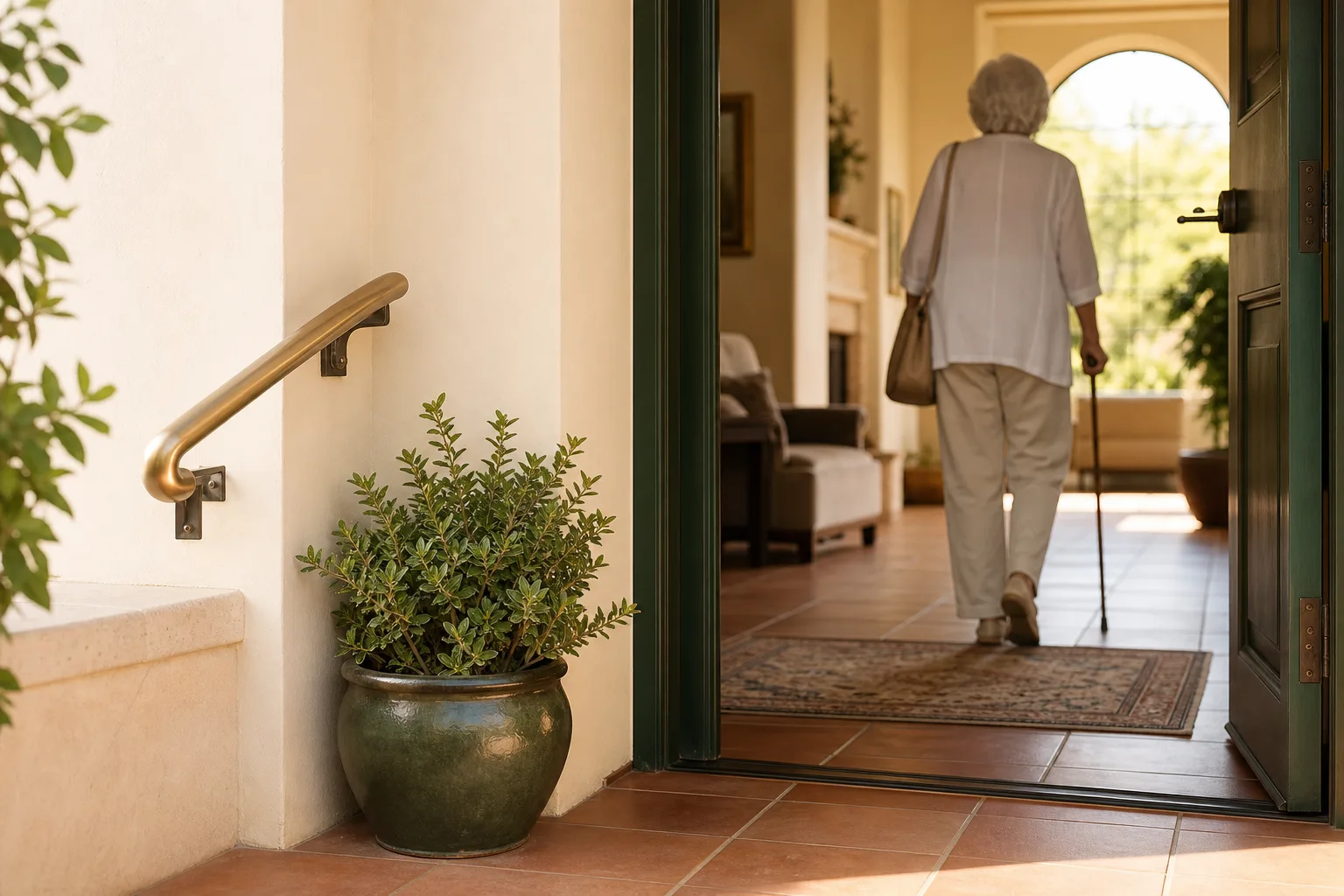
For families
This is a resource, not a sales page. It is written by Bianca Fabbo, a registered nurse, and every clinical claim is backed by a reputable source you can check yourself. Read it, use it, and reach out if you want a nurse on your team to put it into practice.
RN-led care
A registered nurse leads every client
Multi-credential team
RN, RDN, PharmD, and Nurse Educator
Ten communities
Scottsdale, Phoenix, and the East Valley
Founder-led
Bianca Fabbo, MSN-ed, RN, AMB-BC
By Bianca Fabbo, MSN-ed, RN, AMB-BC
President and Founder, Prata Health
What aging in place really takes
Aging in place means growing older in your own home rather than moving to assisted living or a skilled nursing facility. Wanting to stay home is the easy part. Almost everyone wants that. The harder question is whether home is still safe, and who is paying attention to the small changes that decide the answer.
What this means
The honest version of aging in place is not a single grab bar or a medical alert button.
- It is four things, watched together over time: a home that fits an aging body, a plan to prevent falls, support for memory changes when they come, and a way to keep the caregiver from burning out. The tips below walk through each one. None of them require a facility.
- All of them require attention, and that attention is what turns staying home from a hope into a plan.
With Prata Health
- Make the home fit the person, not the other way around
- Treat fall prevention as ongoing clinical work, not a one-time fix
- Plan for memory and cognition changes before a crisis forces it
- Protect the caregiver, because the plan collapses if they do
- Keep one clear picture of medications, providers, and recent changes
Safety
Home safety, room by room
Most of what makes a home unsafe is invisible until someone trips on it. The good news is that home modification is one of the most effective and lowest-drama ways to extend independent living. You do not need to renovate. You need to walk every room with fresh eyes and remove what an aging body can no longer forgive.
Work through the home in the order someone actually moves through it: the entry, the hallways, the bathroom, the bedroom, the stairs, and the kitchen. The bathroom and the stairs are where the worst falls happen, so give them the most attention.
Floors
remove or tape down loose rugs, clear cords and clutter from walking paths, and fix uneven thresholds
Lighting
add bright, even lighting in hallways and on stairs, and put motion-sensor night lights between the bedroom and bathroom
Bathroom
install grab bars by the toilet and inside the shower, add a non-slip mat, and consider a shower seat and a raised toilet seat
Stairs
make sure there are secure handrails on both sides, mark the top and bottom step, and keep them lit and clear
Reach and access
move daily-use items to waist height so there is no climbing or deep bending, and keep a phone within reach in common rooms
Fall prevention for seniors at home
Fall prevention for seniors at home deserves its own section because falls are the single biggest threat to staying home. The Centers for Disease Control and Prevention reports that more than one in four adults age 65 and older falls each year, and a fall is often the event that ends independence and forces a move. The encouraging part is that fall risk is not fixed. Many of the factors behind it can be screened for and reduced.
A real fall-prevention plan goes well beyond clearing the floor. It looks at the body and the medications too. Certain prescriptions quietly raise fall risk by causing dizziness, drowsiness, or low blood pressure, and a medication review is one of the highest-value things a nurse or pharmacist can do. Strength and balance change slowly enough that families often miss the drift until a fall makes it obvious.
- 01
Ask a clinician to screen for fall risk at least once a year, and after any fall or near-fall
- 02
Review every medication, prescription and over-the-counter, for ones that cause dizziness, drowsiness, or low blood pressure
- 03
Keep moving
simple strength and balance exercises, or physical therapy when balance has clearly declined
- 04
Have vision and hearing checked, since both affect balance and awareness
- 05
Get up slowly from sitting or lying down to avoid the blood-pressure drop that causes dizziness
- 06
Wear supportive, non-slip footwear indoors instead of socks or loose slippers
- 07
Treat any fall, even one without injury, as a signal to reassess the whole plan
Dementia care at home
When memory changes enter the picture, aging in place gets more demanding, but it does not automatically mean a move. The National Institute on Aging notes that with the right structure and support, many people living with dementia can stay safely at home well into the condition. The shift is that home safety now has to account for confusion, wandering, and changing judgment, not just physical risk.
Dementia care at home rests on three ideas: simplify the environment, build a steady routine, and stay a step ahead on safety. People with memory changes do best with calm, predictable days and a home stripped of unnecessary hazards and decisions. As the condition progresses, the plan has to evolve with it, which is exactly the point where many families bring in a nurse to keep the care matched to the stage.
Keep a consistent daily routine for meals, medication, and rest to reduce confusion and agitation
Reduce clutter and noise, and use clear labels or signs on doors and drawers to aid orientation
Address wandering risk early
secure exterior doors, consider door alarms, and make sure the person carries ID
Lock away or remove hazards like medications, cleaning chemicals, the stove, and car keys when judgment is affected
Simplify choices and tasks into one step at a time, and allow extra patience and time
Watch for sudden changes in behavior or alertness, which can signal pain, infection, or a medication problem rather than the dementia itself
Match the level of support to the stage, increasing oversight as the condition progresses
Safety
Medication management, the quiet risk
Medications are where aging in place most often goes sideways. Multiple prescribers, multiple refills, doses that change, and one missed or doubled dose can undo months of stability. Adverse drug events are a common and largely preventable cause of hospitalization in older adults, and careful medication reconciliation is one of the most effective defenses against them, according to the Agency for Healthcare Research and Quality.
You do not need a clinical background to lower this risk, but you do need a system. Keep one current list, use it everywhere, and have someone with clinical training review it whenever anything changes. The point is to catch interactions and duplications before they cause a problem, not after.
- 01
Keep one up-to-date list of every medication, dose, and prescriber, and bring it to every appointment
- 02
Use a clearly organized weekly system so doses are not missed or doubled
- 03
Reconcile the full list after every hospital stay or specialist change, when errors are most likely
- 04
Ask a nurse or pharmacist to check for interactions and duplicate medications across all providers
- 05
Set reminders for time-sensitive doses, and store medications safely away from a person with memory changes
Caregiver relief: protecting the person who holds it all together
Most aging-in-place plans quietly depend on one exhausted person, usually an adult child or a spouse. Caregiver relief is not a luxury or a sign of failure. It is part of the plan, because the research is clear that family caregivers carry real physical and emotional strain, and a caregiver who burns out or gets sick is the most common reason a stable home situation suddenly collapses.
Protecting the caregiver means building in real breaks, sharing the load, and accepting help before it becomes a crisis. Respite care, whether a few hours a week or a longer stretch, exists precisely so the primary caregiver can rest, work, or simply step away. Bringing in a professional nurse also shifts the clinical weight, the medication tracking, the symptom watching, the deciding whether something needs a doctor, off the family member who never trained for it.
Schedule regular breaks before you need them, not after you hit the wall
Use respite care, professional or trusted family, so the primary caregiver can rest and recover
Divide tasks among family members instead of letting everything land on one person
Watch for caregiver burnout
exhaustion, resentment, sleep loss, withdrawing from your own life
Hand the clinical load to a nurse so the family can go back to being family
Keep your own medical appointments and support connections, because your health is part of the plan
When to bring in a registered nurse
These tips will carry a family a long way. There is a point, though, where the situation outgrows what love and effort alone can safely manage, and recognizing that point early is its own form of good care. It usually shows up as a pattern: the medications have become too complex to track, the falls or near-falls are repeating, the memory changes are outpacing the routine, or the caregiver is running on empty.
What this means
That is when a registered nurse on the team changes things.
- Most home care assigns caregivers with occasional nurse oversight.
- Prata Health works the other way around, every client is led by a registered nurse who assesses the home, manages the medications, watches for the early changes that predict a fall or a hospital trip, and tells you honestly when a need exceeds what is safe at home.
- The aim is the same as yours: keep your loved one in the home they love, safely, for as long as that home can be made safe.
With Prata Health
- The medication list has grown too complex to manage confidently at home
- Falls or near-falls are happening, or balance has clearly declined
- Memory or judgment changes are creating real safety risk
- A chronic condition keeps leading to emergency visits or hospital stays
- The family caregiver is overwhelmed, exhausted, or unwell
Questions, answered
Frequently asked
Not listed here? Call 480-404-4737 and ask.
What are the most important aging in place tips for keeping a parent home safely?
Start with the four areas that matter most: home safety, fall prevention, support for any memory changes, and relief for the caregiver. Make the home fit an aging body by removing trip hazards, improving lighting, and adding grab bars in the bathroom and on stairs. Treat fall prevention as ongoing, including a yearly fall-risk screen and a medication review, because the CDC reports more than one in four older adults falls each year. Keep one current medication list and have it checked whenever anything changes. And protect the primary caregiver with real breaks and shared responsibility, since caregiver burnout is one of the most common reasons a stable home situation falls apart.
How do I prevent falls for an older adult at home?
Fall prevention for seniors at home works best as a layered plan rather than a single fix. Clear the floor of loose rugs, cords, and clutter, brighten hallways and stairs, and add grab bars and non-slip mats in the bathroom. Just as important is the part families miss: ask a clinician to screen for fall risk and review every medication, since some prescriptions cause dizziness or low blood pressure that raises the risk. Keep the person moving with strength and balance exercises or physical therapy, check vision and hearing, and use supportive non-slip footwear. The CDC notes that many fall-risk factors can be reduced, so treat any fall or near-fall as a signal to reassess the whole plan.
Can someone with dementia safely age in place at home?
Often, yes. The National Institute on Aging notes that with the right structure and support, many people living with dementia can stay safely at home well into the condition. Dementia care at home rests on simplifying the environment, keeping a steady daily routine, and staying ahead on safety, which means securing exterior doors against wandering, locking away medications and chemicals, and reducing clutter and noise. The key is matching the level of support to the stage and increasing oversight as the condition progresses. Many families bring in a registered nurse at this point to keep the care plan aligned with how the person is actually changing.
What is caregiver relief and why does it matter for aging in place?
Caregiver relief means building real breaks and shared support into the plan so the primary caregiver does not carry everything alone. It matters because most aging-in-place arrangements quietly depend on one family member, and a caregiver who burns out or gets sick is the most common reason a stable home situation suddenly collapses. Relief can be respite care for a few hours a week, dividing tasks among family, or bringing in a professional nurse to take over the clinical load: the medication tracking, the symptom watching, and the deciding whether something needs a doctor. Protecting the caregiver is not optional. It is what keeps the whole plan standing.
How do I know when it is time to bring in professional nursing help?
Watch for a pattern rather than a single event. The signs that a family has outgrown managing alone are usually a medication list too complex to track confidently, falls or near-falls that keep repeating, memory or judgment changes that create real safety risk, a chronic condition that keeps leading to hospital visits, or a caregiver who is exhausted and unwell. Any one of these is worth a conversation. At Prata Health, every client is led by a registered nurse who can assess the home, manage the medications, and catch the early changes that predict a fall or a hospital trip, so the family can step back from the clinical weight without taking their loved one out of the home.
Is aging in place actually realistic, or is assisted living usually safer?
For many families it is genuinely realistic. Most older adults strongly prefer to stay in their own home, and the National Institute on Aging confirms that staying home is achievable when the right safety and support systems are in place. Many moves to assisted living are triggered by a preventable event: a fall, a medication error, or a missed change in health that a clinician would have caught. By putting fall prevention, home safety, medication oversight, and caregiver support in place, families can frequently delay or avoid a move. There is a point where home can no longer be made safe, and an honest nurse will tell you when you reach it, but that point usually comes later than families fear.
Sources
- National Institute on Aging (NIH), Aging in Place: Growing Older at Home link
- Centers for Disease Control and Prevention (CDC), Facts About Falls link
- Centers for Disease Control and Prevention (CDC), STEADI: Stopping Elderly Accidents, Deaths and Injuries link
- National Institute on Aging (NIH), Aging in Place: Tips on Making Home Safe and Accessible link
- National Institute on Aging (NIH), Home Safety and Alzheimer's Disease link
- Agency for Healthcare Research and Quality (AHRQ), Patient Safety Network: Medication Reconciliation link
- National Institute on Aging (NIH), Taking Care of Yourself: Tips for Caregivers link
Explore more
Begin with a conversation
Let's talk about the care your family needs.
A consultation is a conversation, no obligation. We listen first, then build the plan around you.